The residences journal · Exterior audio
A soundtrack for life by the lake.
The short version
The best outdoor audio begins with the places you spend time: the dining terrace, the garden, the firepit, and the boathouse. Design comfortable coverage around those spaces, with separate volume where it matters. Speaker placement, suitable outdoor equipment, protected wiring, and reliable phone control all belong in the same plan.
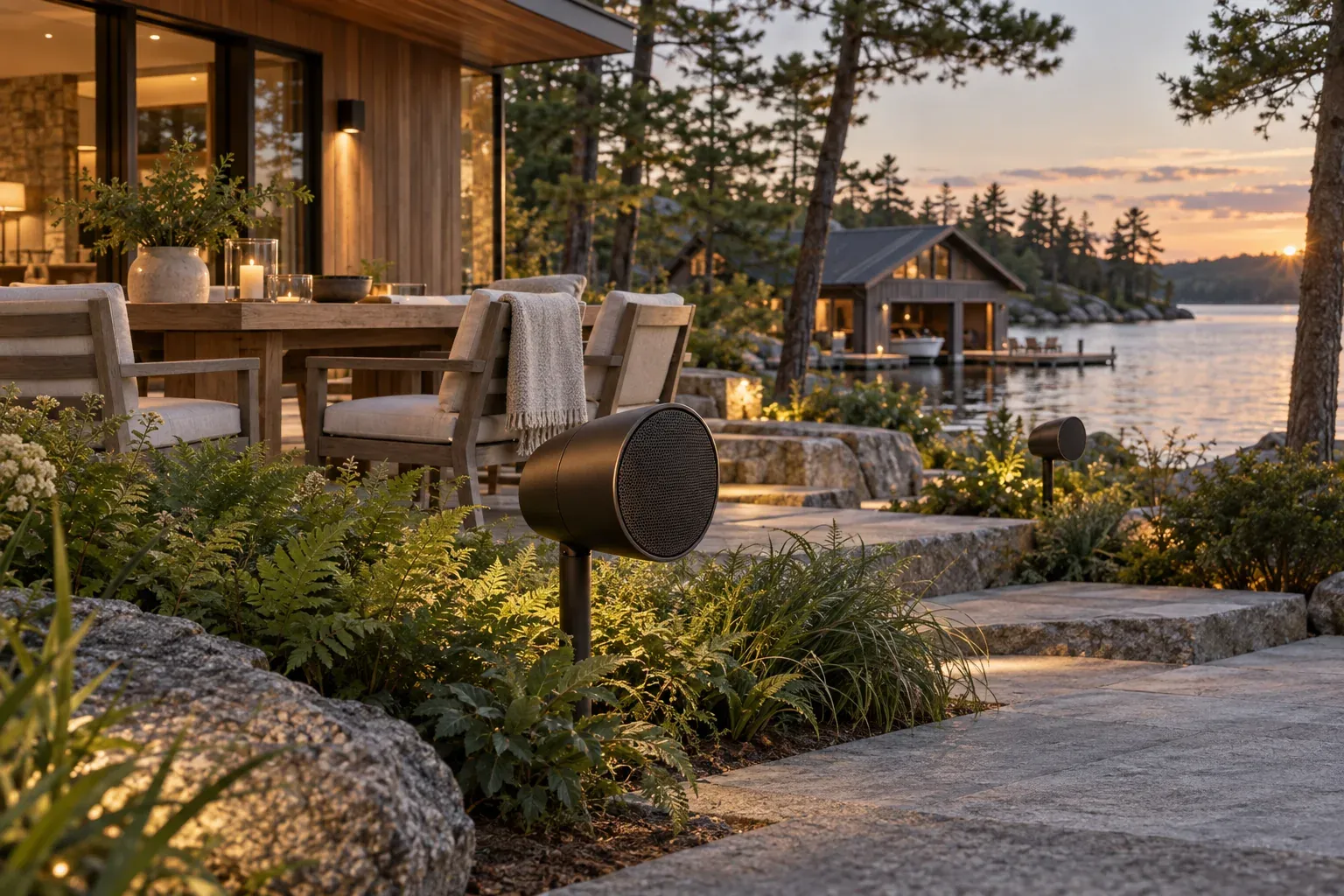
The terrace is set for dinner. Someone is coming up from the dock. Music is playing softly where people are gathered, and conversation still comes easily.
That is a useful ambition for an outdoor audio system in Muskoka. The aim is to make time outside more enjoyable, with sound that feels part of the setting. Getting there takes more thought than mounting a pair of speakers on the house and turning them up until the far end of the garden can hear them.
Design around where people gather
Begin with your landscape plan, or a simple sketch of the property. Mark the outdoor dining table, covered seating, pool, firepit, and boathouse. Note which spaces are used together and which should have independent control.
A terrace and an adjacent lounge may work well as one listening area. A boathouse at a distance may need its own zone. The ability to share a playlist is useful; the ability to leave one space quiet is equally valuable.
Think about different times of day. Morning coffee near the house, an afternoon by the water, and dinner with guests make different demands on the system. A good proposal explains how each area will be covered and controlled, rather than treating the entire property as one large room.
Keep the sound close to the experience
Speaker placement should draw sound toward the listening area. Depending on the site, a distributed arrangement of smaller speakers can create more comfortable coverage than a few distant sources turned up high. This is a design choice to evaluate on the property, not a fixed speaker count per square foot.
There are several architectural approaches. Surface-mounted speakers may suit a covered terrace or boathouse. Small landscape speakers can sit within planting beside the stonework, directed toward the places people sit. Their placement and suitability matter more than the category name.
Discuss neighbouring properties and where you want the sound to stop. Directing speakers inward and using sensible volume levels can help, but no arrangement creates an invisible sound boundary. Walk beyond the listening area during commissioning and adjust with the setting in mind.
Around pools and stone terraces
Plan the sound with the pool designer and landscape team, before the stone goes down. Small speakers in adjacent planting can serve the loungers and dining area while keeping paths clear. Where burial is impractical, an above-ground hardscape subwoofer can add bass near the seating. Confirm suitable locations, clearances, drainage, and concealed cable routes for the selected equipment.
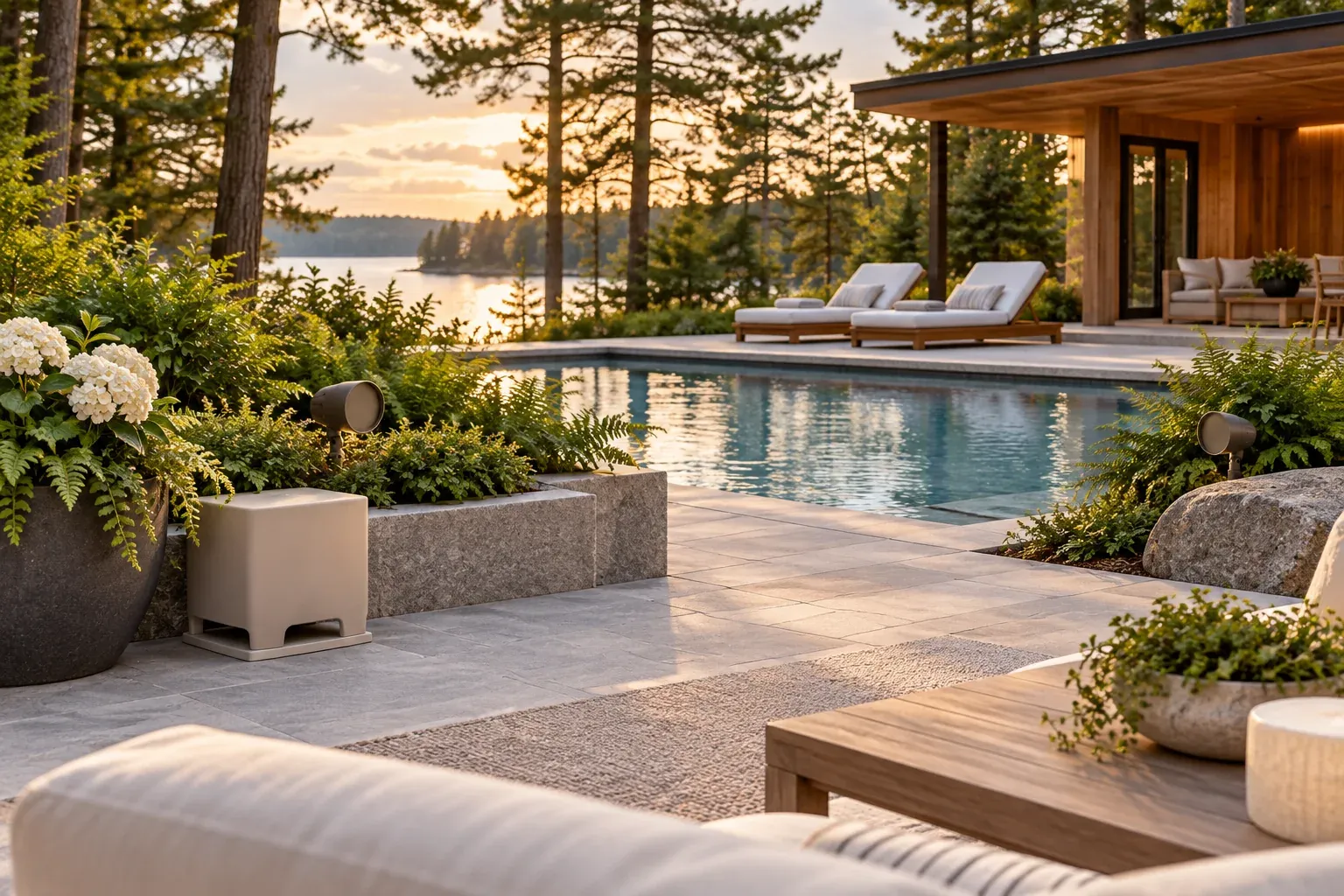
Poolside sound, considered with the stonework. Concept setting based on TruAudio’s AcoustiScape speakers and Hardscape subwoofer.
Treat bass as part of the layout
A system that sounds pleasant close to the house may feel thin in a more open space. Where fuller sound is part of the brief, a suitable outdoor subwoofer may help. Its location should be planned alongside the other speakers, with attention to nearby seating and the rest of the property.
Concealed does not mean forgotten. An in-ground or partially buried component needs the drainage, installation conditions, and service access required by its manufacturer. It should not be placed simply wherever a planting bed hides it best.
With a system such as TruAudio’s SubTerrain PRO, the enclosure sits below ground while a low sound port remains visible. That port needs to stay clear of mulch and planting. The result can be visually quiet without losing the depth that makes outdoor music feel complete.
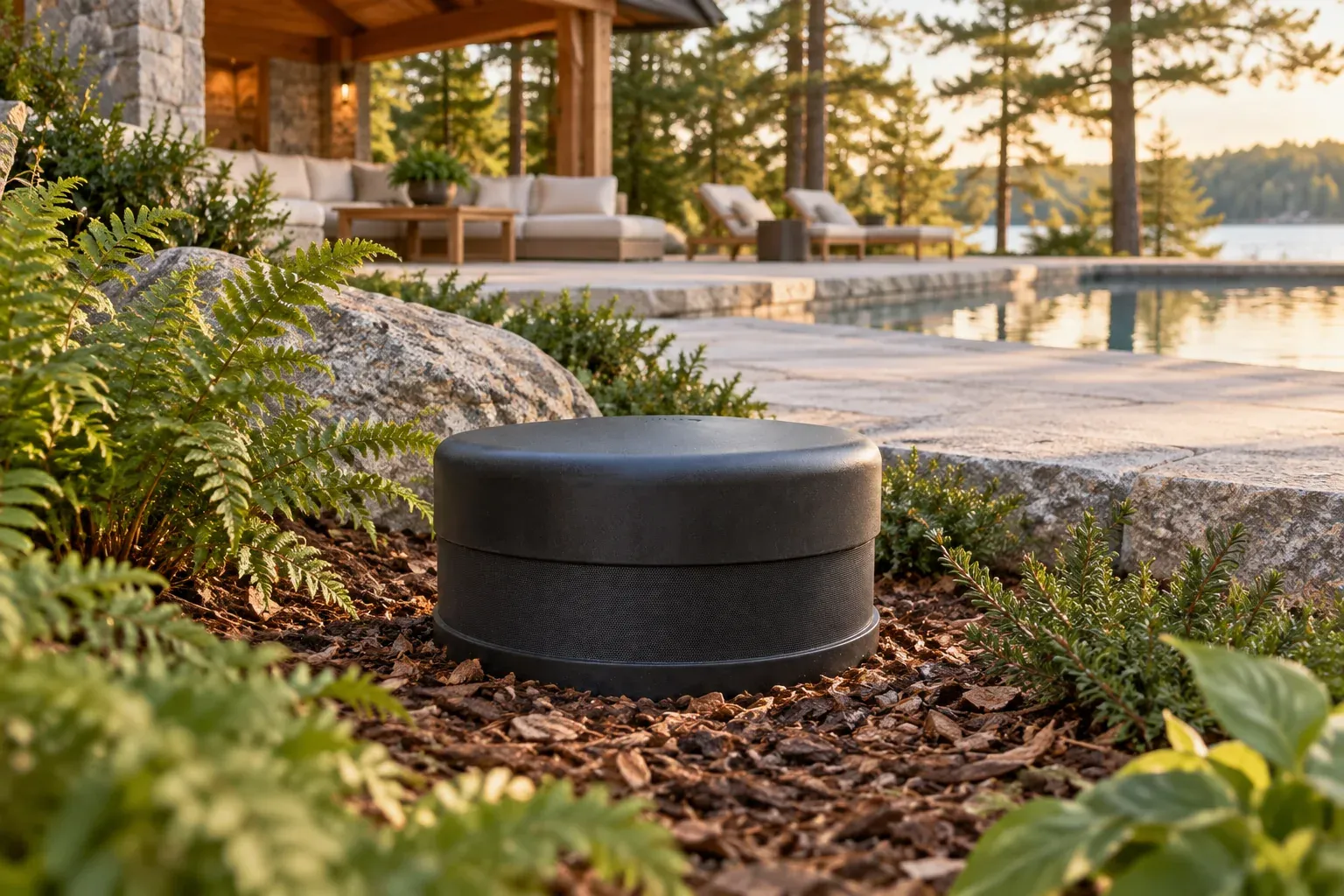
At the surface. Only the sound port remains in view. Concept setting based on TruAudio’s installed product photography.
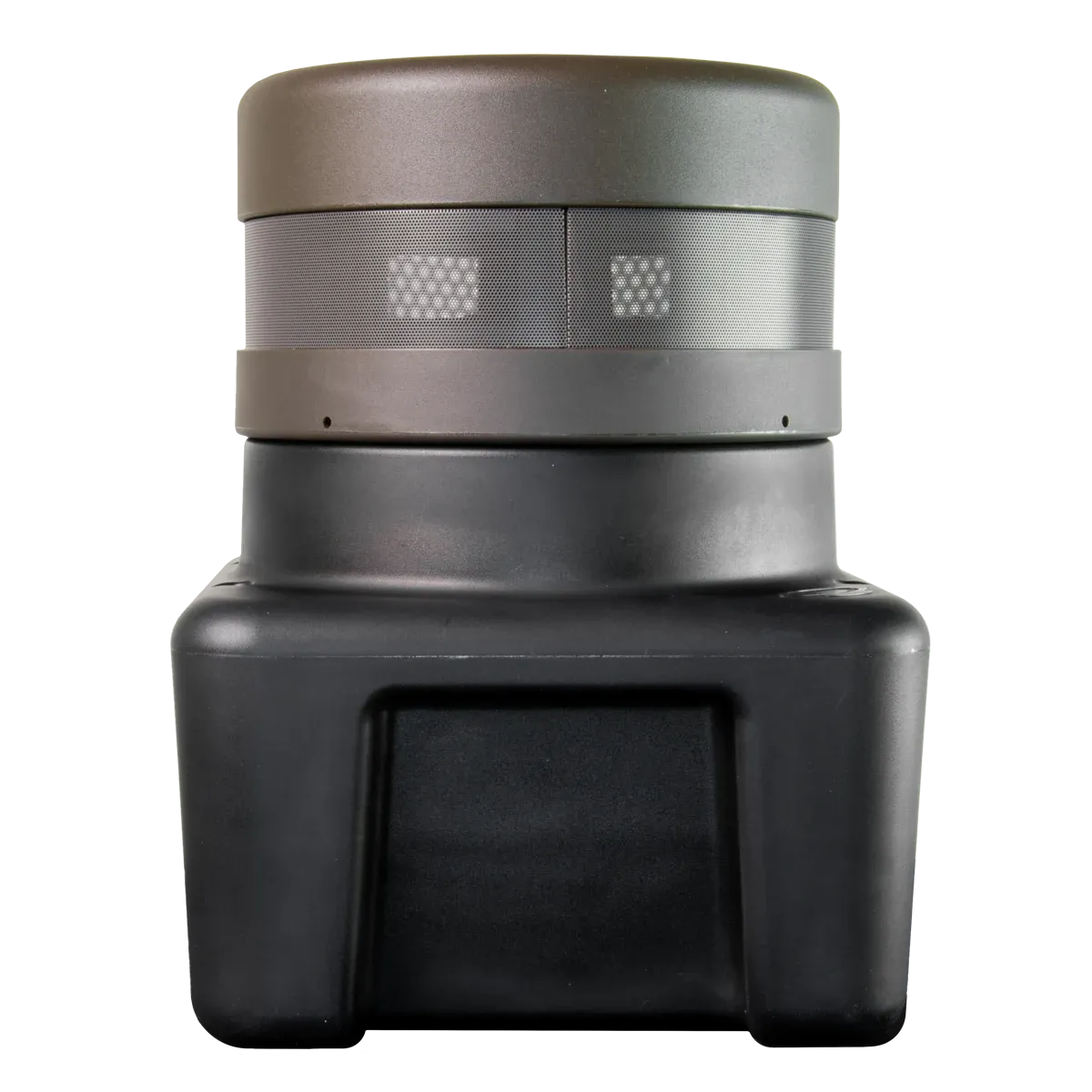
Before installation. The enclosure below the port is buried. Product photograph: TruAudio.
Ask to hear the proposed system at a conversational level. If the main purpose is dinner, reading, and time with friends, those are the conditions that should guide the final balance.
Plan for the actual outdoor environment
A speaker under a deep roof, a unit beside a garden path, and equipment close to the waterfront face different conditions. Select for the specific exposure, temperature range, mounting position, and maintenance needs. An “outdoor” label is a starting point, not a complete specification for every location on a Muskoka property.
Keep amplifiers and networking equipment in an appropriate environment, with ventilation and access for service. If equipment will be in an unheated boathouse, confirm its operating and storage limits and agree what happens when the property is closed for the season.
Your installation plan should address:
- Cable routes coordinated with landscaping, irrigation, and other site work.
- Cable and connections suitable for their installed conditions.
- Protection against damage from maintenance, foot traffic, and seasonal work.
- Mounting that remains accessible for adjustment and replacement.
- A record of concealed routes before planting and finished surfaces cover them.
Plan these details before stonework and landscaping are complete. The cost and disruption of reaching a speaker location can be as important as the speaker itself.
Make phone control work where you listen
The speakers may be wired, but the phone controlling them still needs a reliable way to reach the system. Standing on the dock should not mean walking back to the kitchen to change the volume.
Coordinate the audio plan with WiFi coverage for the terrace and boathouse. Test the actual listening areas using the household’s devices. Signal at a window is not a useful substitute for a test where the seating will be.
Guest access also needs a decision. Should visitors be able to choose music, adjust only the outdoor zones, or simply join the guest WiFi? Some forms of network separation can prevent music devices from appearing on a phone. The network and audio controls need to be configured and tested together.
Connect indoor and outdoor listening thoughtfully
When the kitchen opens onto a terrace, the music should feel coordinated across that threshold. Confirm whether the proposed equipment can group the relevant spaces and keep playback acceptably synchronized for how you use them.
Keep independent volume control. The dining terrace should not need to become louder just because someone wants more sound inside. You should also be able to end the evening outdoors while leaving music on in the home.
If you are planning both systems, read our guide to whole-home interior audio. Defining zones together can prevent awkward boundaries between otherwise well-designed installations.
Choose installation expertise that reaches beyond the speakers
Outdoor audio crosses several disciplines: electrical infrastructure, structured cabling, networking, amplification, landscape coordination, and final listening adjustments. An electrician who specializes in those connected systems can make the routes and the finished experience part of the same conversation.
Ask prospective installers how they will test coverage, document concealed wiring, and teach your household to use the system. At Lume Private Residences, we plan the connections around the property as a whole, including the way outdoor audio meets your home network and other devices.
Tell us about your terrace, landscape, or boathouse. A layout and a description of how you entertain are enough to begin a useful discussion.
Questions homeowners ask
Can outdoor speakers stay outside over a Muskoka winter?
That depends on the selected product, its installation, and the conditions it will face. Confirm temperature limits and seasonal care requirements for every outdoor component. Include any winter shutdown and spring inspection tasks in the handover.
Can the boathouse play different music from the terrace?
Yes, if it is designed as an independent audio zone with compatible source and control equipment. Specify this before the system is selected; separate speaker locations do not automatically mean independent playback.
What drives the cost of outdoor audio?
Listening areas, speaker quantity and type, amplification, wiring distances, landscape access, network coverage, and control requirements all contribute. Ask for the installation and commissioning scope alongside the equipment list so you can compare complete proposals.
Considered for your property
Bring the music outside.
From a quiet terrace to a complete waterfront property, we’ll help plan sound around the places you love to spend time.
Plan your outdoor audioBased in Bracebridge. Serving Muskoka and its lake communities.