
Definitions
What is a fiber optic backbone in a commercial site?
A fiber optic backbone is the high-capacity cabling that connects floors, buildings, and main distribution frames in a commercial site. Understand where it fits, how it is tested, and when to consider it.
By Lume Technical Team · Published · Updated
A fiber optic backbone is a set of optical links that connects key parts of a network: equipment rooms, floors, or separate buildings. It carries data using light, giving a site options for distance and capacity that may be difficult to achieve with copper cabling alone.
The fiber is one part of the link. The equipment and optical transceivers at each end, the fiber type, and the installed route determine which applications it can support.
Where a backbone fits
In a larger building, data cables from devices often return to a nearby telecommunications room. The backbone connects those rooms to the main network equipment. Across a campus, it can connect buildings.
You may see rooms described as an MDF (main distribution frame) or IDF (intermediate distribution frame). In practice, ask for the actual room names and endpoints on the drawings so everyone is discussing the same link.
Single-mode and multimode
Single-mode fiber is commonly chosen for longer links and can also be used within a building. Multimode fiber is common on shorter premises links where the intended optics and distance suit it.
There is no single speed or distance that applies to every fiber installation. Specify the fiber type, intended application, optics, connector arrangement, and route together. An existing fiber may support an equipment upgrade, but that should be checked rather than assumed.
What an optical loss budget means
Some light is lost through the fiber, connectors, and splices. A loss budget accounts for those contributions and compares the expected link loss with the application’s allowance.
In plain English: the signal must still be usable when it reaches the far end. The design needs to allow for the whole route, not just the cable length.
What gets installed and documented
A fiber project can include pathways, cable installation, enclosures, termination, splicing, and patching. Confirm the strand count and any spare capacity, along with the connector type, cable rating, route, and labelling scheme.
Useful records include endpoint names, fiber identifiers, splice details where applicable, installed routes, photos, and results tied to the correct link.
What the tests tell you
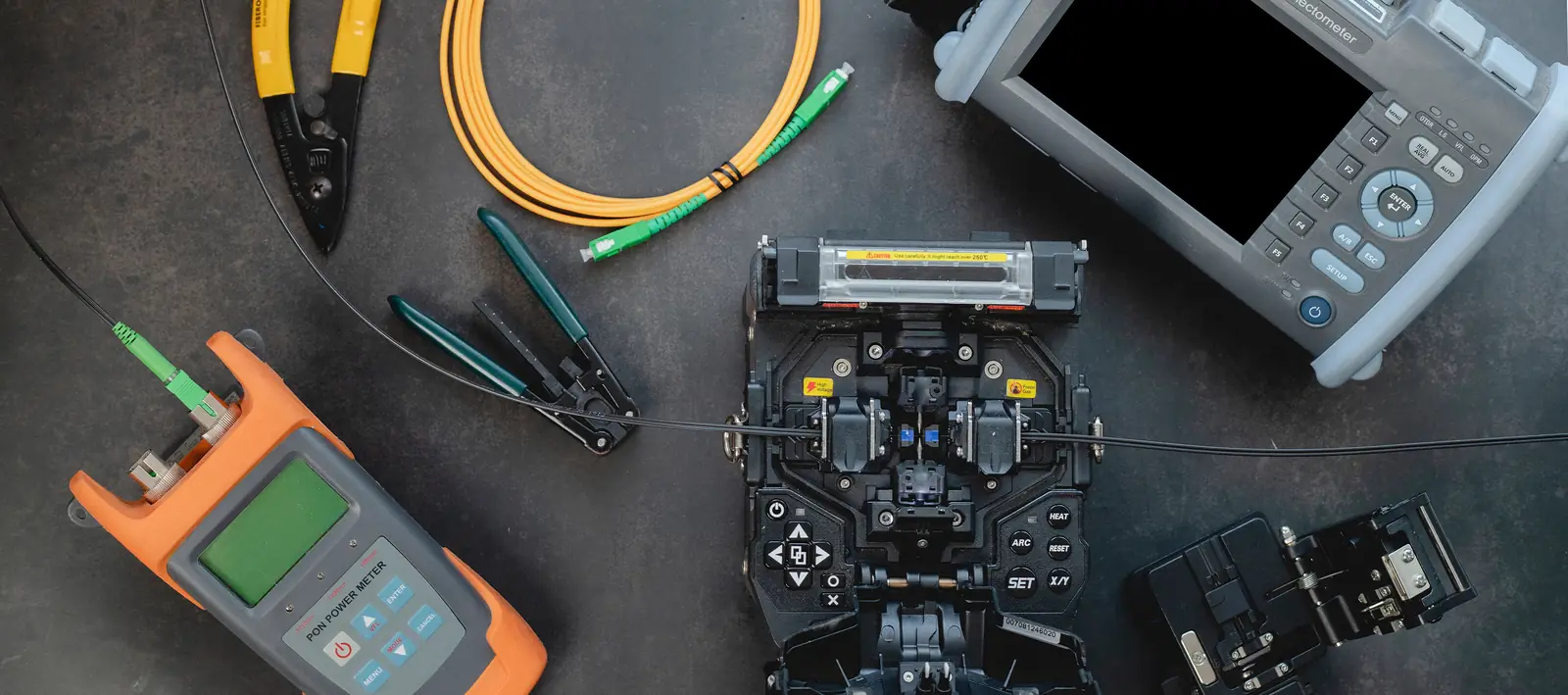
Insertion-loss testing uses a light source and power meter or optical loss test set to measure loss through a link. OTDR testing examines backscatter to help characterize events and locate faults. OTDR results do not replace direct insertion-loss measurements. The Fiber Optic Association explains the distinction.
Agree the required tests, wavelengths, reference method, acceptance limits, and result format before installation. Connector inspection and cleaning also belong in the workflow.
When to consider fiber
Consider it when connecting buildings or equipment rooms, addressing longer routes, increasing backbone capacity, or planning resilient connections. A second cable in the same pathway does not provide the same protection as a genuinely diverse route.
For a small site with short links, copper may suit the design. Assess the distance, environment, equipment, and support needs together.
Explore Lume’s fiber service or share your route and requirements.