
Fiber optics
Connect further. Build in room to grow.
Fiber backbone installation, splicing, repair, and testing for connections between network rooms, floors, and buildings. Planned around distance, capacity, and a documented optical loss budget.
Discuss your project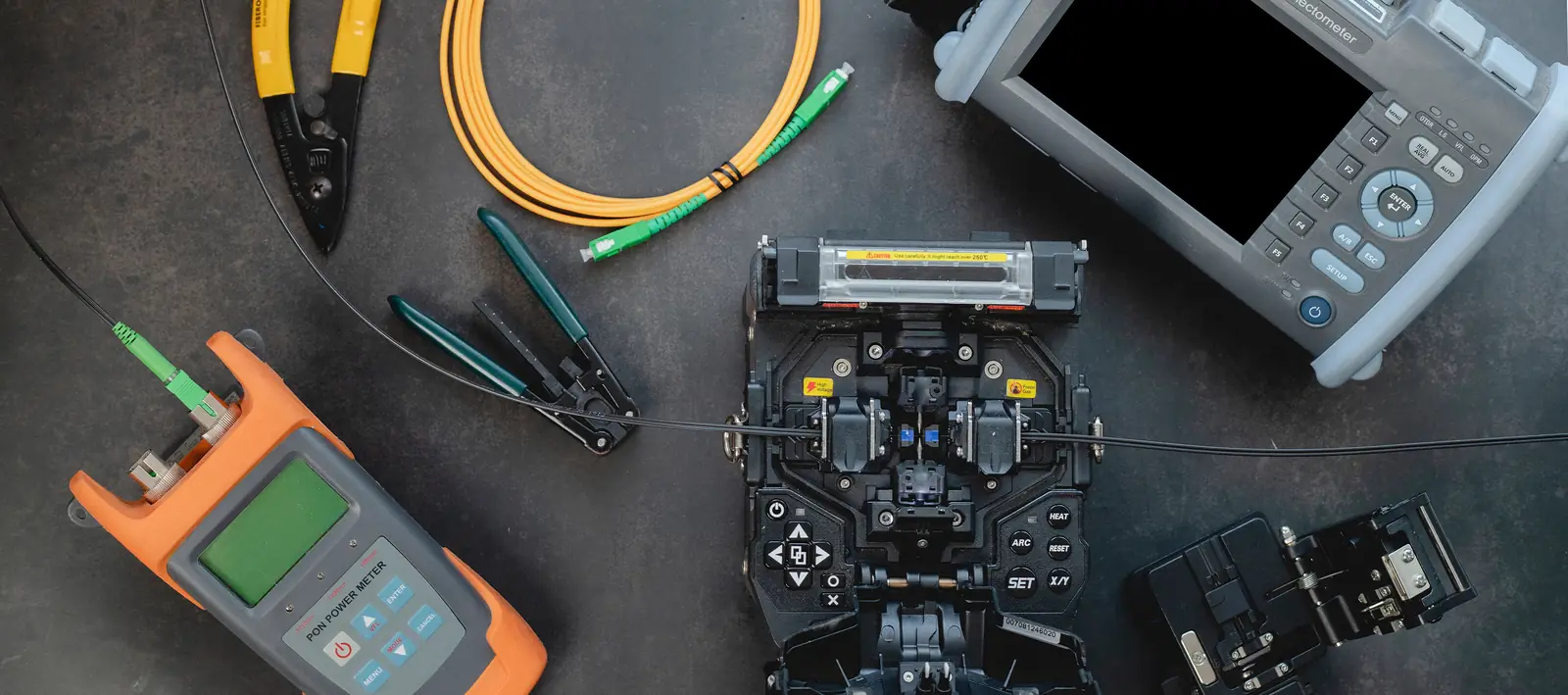
In plain English
High-capacity connections carried by light.
Fiber links parts of a site that copper cabling may not reach. It carries data using light and is useful for longer routes, building-to-building links, and busy network backbones.
When to bring us in
- Connecting floors, buildings, or distant equipment
- Upgrading a network backbone
- Locating or repairing a damaged fiber link
A detail that matters
Loss testing and fault location answer different questions.
Insertion-loss testing checks the loss through a link. An optical time-domain reflectometer (OTDR) helps locate events such as splices, bends, or breaks. One does not replace the other.
Backbone design
Single mode and multi mode pathways, slack storage, and enclosure planning based on distance, environment, and upgrade path.
Splicing & terminations
Fusion splicing, MPO/MTP, and connectorized solutions with inspection and cleaning built into the workflow.
Testing & documentation
Loss testing, polarity validation, and closeout packages with results, labeling, and photos you can use years from now.
Delivery approach
Plan the route. Verify the link.
We build fiber systems that are easy to service and upgrade. Pathways, slack, and labeling are planned before installation. We coordinate the outage window and acceptance tests with your IT team so the physical link and connected equipment are ready together.
What you receive
- Documented routes, slack storage, and labeling that match what is installed in the field.
- Insertion-loss test results, with OTDR characterization where specified, organized by fiber identifier.
- Clear closeout packages with photos of trays, panels, and labeling.
- Fusion repair and emergency restoration when a backbone link needs fast field response.
- Coordination with your IT team for outage windows, transceiver requirements, and cutover checks.
Related services
Related infrastructure services
Network Infrastructure
Structured cabling and closet readiness that fiber backbones depend on at each end.
WiFi
Wireless deployments where AP uplinks and closet capacity tie back to fiber paths.
Onsite Support
Emergency restoration and field response when a link needs accountable technicians onsite.
VoIP
Voice projects where backbone upgrades and cutover timing need to stay aligned.
Fiber FAQ
Straight answers about fiber
How fast is fiber?
Supported speed depends on the fiber type, link length, connectors, installed loss, and transceivers. Existing fiber may support an equipment upgrade, but we check the complete link against the intended application.
Singlemode vs multimode, what is the real difference?
Singlemode is often the choice for longer distances and long term flexibility. Multimode is common for shorter in building links where optics can be cost effective. We recommend based on distance, pathways, and upgrade plans.
What are the biggest benefits of fiber?
Long distance, high bandwidth, and electrical isolation. You can often upgrade electronics later without re running the cable.
Is fiber actually “futureproof”?
Fiber can support a useful upgrade path when the cable type, route, spare capacity, and connections suit later applications. Future equipment compatibility still needs to be checked.
How far can fiber run?
It depends on the fiber type and optics, but fiber is designed for long links. We design around an optical budget so you are not guessing.
When does fiber make sense vs copper?
If you need longer distance, higher speeds, electrical isolation, or a clean backbone between closets or buildings, fiber is usually the right tool. For short endpoint runs, copper is often practical.
What is a PON network and why would I use one?
PON uses optical splitters so one feeder can serve many endpoints without powered switching hardware in between. It can reduce closet complexity in some hospitality, multi tenant, and large footprint environments.
What are the tradeoffs with PON?
Bandwidth is shared on segments, optical budgets matter, and troubleshooting differs from traditional switched Ethernet. We help you decide if it fits your operational and support model.
What testing should we expect on a fiber install?
Agree insertion-loss measurements, polarity checks, acceptance limits, and the result format. OTDR testing can locate or characterize events where required; it does not replace insertion-loss testing.
Have a site-specific question? Send it over. Or read what a fiber backbone is designed to do.
In the field / JD Sports
Infrastructure behind new store openings.
Lume works directly with JD Sports New Store Opening and IT teams, coordinating drawings, materials, installation, testing, and handoff.
Let’s work through it
Let’s talk about fiber optics.
An upcoming project, a recurring problem, or a plan that needs a second set of eyes. Start with what you know. We’ll help clarify the next step.