
Business voice
Keep the conversation going through the change.
Business phone deployment, network readiness, and cutover support. We coordinate the physical rollout with your IT team and voice provider so responsibilities and change windows are clear.
Discuss your project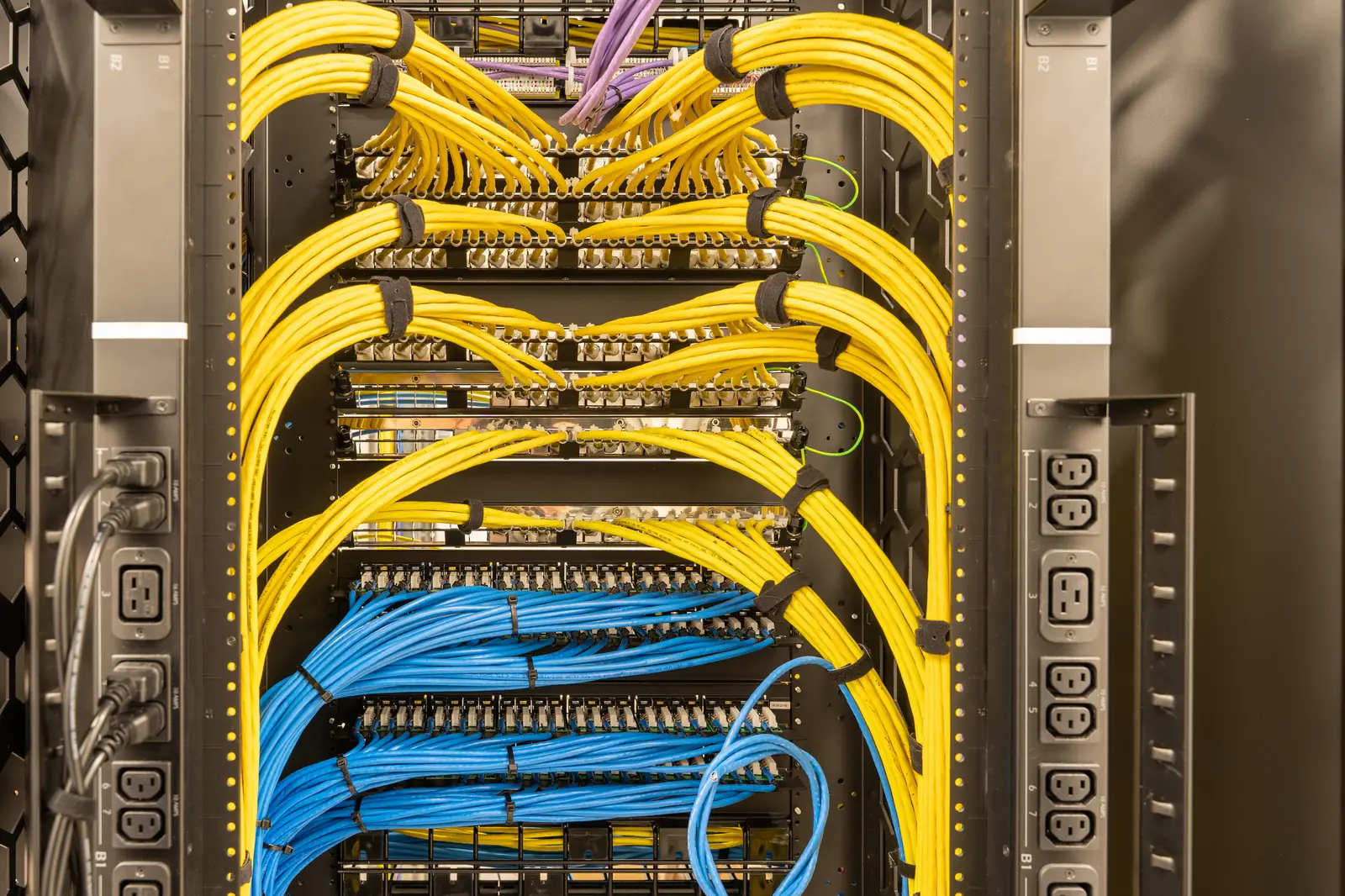
In plain English
Business calls carried over your network.
Voice over Internet Protocol (VoIP) uses a data network for phone calls. Handsets depend on reliable cabling, network configuration, and power, as well as the service supplied by your voice provider.
When to bring us in
- New phones or a change of voice provider
- An office move or multi-site handset rollout
- Call quality issues that need onsite investigation
A detail that matters
Agree the cutover and recovery plan.
Confirm number transfers, call flows, endpoint readiness, and who validates service. Define a fallback with your provider before a change window, and record what was tested at handoff.
What Lume does
Prepare the environment, support the rollout, and document the finished state
Readiness assessment
We review the site conditions, cabling, switching, patching, and endpoint requirements that affect whether the voice rollout will go smoothly.
Endpoint rollout and cutover support
We help stage phones, coordinate installation, and support a cleaner transition from the old environment to the new one.
Documentation and cleanup
We record the important changes, labeling, and supporting notes so the finished environment is easier for client teams to understand and maintain.
How delivery works
Cutover planning that respects the way the business actually operates
Voice changes affect people fast. We focus on the supporting details, the rollout sequencing, and the closeout notes needed to reduce confusion before, during, and after cutover.
Review the current environment
We start with the actual site conditions, including cabling, rack layout, switching, device counts, and any timing constraints that affect the cutover.
Align infrastructure and rollout sequencing
Ports, PoE, patching, endpoint staging, and user impact are coordinated before the change window so the rollout is not held together at the last minute.
Execute around business continuity
We schedule the work around live operations, user groups, and support expectations so the voice change is easier to absorb.
Document the finished state
Closeout captures the practical details needed to support moves, adds, changes, and future troubleshooting.
What you receive
A better record of what changed and how it was deployed
The handoff should help your team support the environment, not force them to reconstruct it later. That is why we keep the rollout records practical and readable.
- Endpoint rollout notes, labeling updates, and connectivity records that reflect the final environment.
- Supporting notes on patching, switching readiness, and any known follow-up items.
- A cleaner turnover package for internal IT, workplace teams, and future service work.
- Documentation that makes later moves, adds, and changes easier to manage.
Technical depth
The supporting details that keep voice deployments stable
Cabling, PoE, and switching readiness
Voice quality depends on the supporting network. We help verify the patching, power, and switch readiness needed to support deployed endpoints cleanly.
Endpoint rollout and labeling
Phones, ports, and work areas need clear records so support teams know what changed and how endpoints were deployed.
Cutover documentation for support
A good VoIP rollout leaves behind practical notes, not just a completed install. That helps future adds, changes, and issue response move faster.
Related services
Other scopes that often move with VoIP work
Network Infrastructure
Structured cabling and rack readiness for cleaner voice deployments.
WiFi
Wireless and broader connectivity work where voice projects overlap with office or hospitality upgrades.
Onsite Support
Field help for remediation, refresh work, and day-two service after a rollout.
Fiber Optics
Backbone and uplink work when a voice project is tied to larger network upgrades.
VoIP FAQ
Answers before the cutover window arrives
Do you only handle phones, or the supporting infrastructure too?
We handle the infrastructure side as well. That includes the cabling, patching, and switching readiness that help a VoIP deployment go more smoothly.
Can you work around an occupied office or active site?
Yes. VoIP work often needs to be scheduled around front desks, staff teams, business hours, or specific cutover windows. We plan the work with that in mind.
What usually causes trouble during a voice cutover?
The biggest issues usually come from poor preparation, unclear patching, weak documentation, or site-specific constraints that were not addressed early enough.
Can you support moves, adds, and changes after deployment?
Yes. The handoff is designed to make those follow-up changes easier. Clear records and labeling help keep the environment manageable after the initial rollout.
What does a good VoIP closeout include?
It should capture how endpoints were rolled out, what ports or locations changed, and the practical notes your internal team or next service technician will need later.
In the field / JD Sports
Infrastructure behind new store openings.
Lume works directly with JD Sports New Store Opening and IT teams, coordinating drawings, materials, installation, testing, and handoff.
Let’s work through it
Let’s talk about your business phones.
An upcoming project, a recurring problem, or a plan that needs a second set of eyes. Start with what you know. We’ll help clarify the next step.