
CCTV & cameras
See what matters. Know what you’re looking at.
Commercial camera systems with clear coverage objectives, coordinated cabling, and documented handoff. From entrances and sales floors to loading areas and back-of-house spaces.
Discuss your project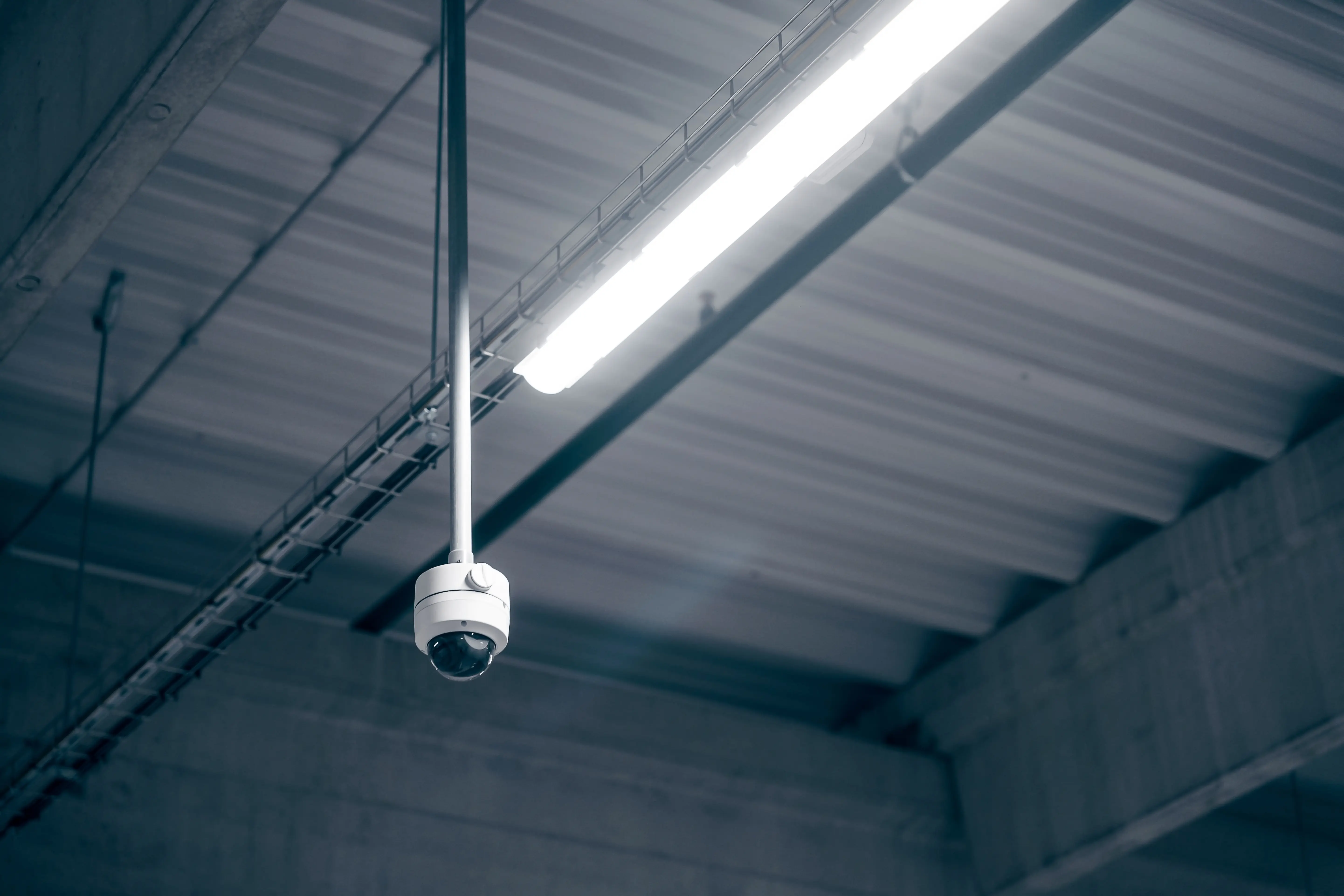
In plain English
Cameras, connections, and recording working together.
CCTV gives your team a view of selected areas and a record to review. Useful footage depends on camera placement, lighting, network connections, and recording settings—not resolution alone.
When to bring us in
- Blind spots or footage that misses useful detail
- New cameras, a recorder upgrade, or a site refresh
- Unclear camera locations, ports, or recording settings
A detail that matters
Define the purpose of each view.
An overview of a loading area and a view intended to identify a person need different framing. Field of view, mounting height, lighting, and retention requirements should be agreed before hardware is selected.
What Lume does
Coverage planning, infrastructure coordination, and supportable delivery
Coverage planning
We help define what each camera is expected to capture, how the site is used, and what constraints matter before devices are mounted.
Infrastructure coordination
Cabling, PoE switching, pathways, mounts, and storage all need to line up. We coordinate those dependencies so the CCTV scope does not become a patchwork of trades.
Rollouts, upgrades, and cleanup
We support new installs, expansions, camera replacements, and remediation work when an inherited system needs clearer labeling, better documentation, or more reliable infrastructure.
How delivery works
Planned around the site, not just the device list
Good CCTV work depends on more than mounting cameras. We align site access, cabling, switching, storage, and closeout so the finished system is easier to operate and easier to support.
Define the coverage goals
We review the site, the operating environment, and the areas that matter most so the system is planned around real use, not generic camera counts.
Coordinate power, data, and retention
We align cabling, PoE readiness, storage expectations, and viewing requirements before install day so there are fewer surprises at turn-up.
Install with labeling discipline
Mounts, device IDs, ports, and pathways are kept organized so service teams can trace what was installed without opening a guessing game.
Test and close out
We verify camera views, record the system layout, and package photos, labels, and key notes so the handoff is usable later.
What you receive
A system that is easier to review and support later
We keep the closeout practical. The point is not to create a thick binder. The point is to give your team enough clarity to manage the system, troubleshoot faster, and plan future changes with less risk.
- Camera locations, device IDs, and cabling records that match what is in the field.
- Photos of key views, mounts, cabinets, and pathway details where relevant.
- Retention, storage, and viewing notes captured in plain language for stakeholders and support teams.
- A cleaner closeout package for future troubleshooting, additions, or replacements.
Technical depth
Camera, network, and recording considerations
PoE and switching readiness
Cameras depend on the underlying network. We plan around switch capacity, uplinks, rack space, and patching so the CCTV rollout does not create avoidable bottlenecks.
Storage and retention planning
Retention expectations should match operational needs and available storage, with practical discussion around how footage will actually be reviewed and maintained.
Segmentation and supportability
Where the client environment calls for it, we help separate CCTV traffic, organize remote access expectations, and document the system so future changes stay manageable.
Related services
Common scopes that connect to CCTV work
Network Infrastructure
Structured cabling, racks, and pathways that keep camera systems supportable.
Alarm Systems
Security infrastructure planned with site coordination and handoff quality in mind.
WiFi
Wireless readiness where cameras intersect with broader site connectivity needs.
Onsite Support
Field support, remediation, and multi-site follow-through after initial deployment.
CCTV FAQ
Answers before camera work starts
Can you work with an existing CCTV system?
Often, yes. We can assess what is already in place, identify what is worth keeping, and show where the real support or coverage gaps are before a full replacement is considered.
Do you only install cameras, or do you handle the cabling and switching too?
We handle the infrastructure side as well. That includes cabling, patching, pathway planning, PoE readiness, and the coordination needed so the camera system works as one project.
How do you plan retention and storage?
We start with operational needs, not generic assumptions. The right answer depends on camera counts, expected recording windows, resolution, and how the footage will actually be used.
Can you install around live operations?
Yes. CCTV work often has to happen in active stores, offices, hospitality spaces, or public-facing environments. We plan access, ladders, safety, and timing so disruption stays controlled.
What does good CCTV handoff look like?
Clear device labeling, recorded locations, photos where useful, and documentation that helps the next technician or internal team understand what was installed and how it is connected.
In the field / JD Sports
Infrastructure behind new store openings.
Lume works directly with JD Sports New Store Opening and IT teams, coordinating drawings, materials, installation, testing, and handoff.
Let’s work through it
Let’s talk about video surveillance.
An upcoming project, a recurring problem, or a plan that needs a second set of eyes. Start with what you know. We’ll help clarify the next step.